by BPD Team | Jan 17, 2022
It is easy to get confused when you are researching hot water components for your property. There are many different parts, fittings, and compliance rules that go into a modern plumbing setup, and it can sometimes feel like plumbers are speaking a completely different language!
One of the most common points of confusion for homeowners and building managers alike is understanding temperature control. The wonderful little device that helps achieve the right hot water temperature is either a tempering valve or a thermostatic mixing valve, which can easily be mixed up but are actually two different things. Let’s take a look at both options to help clear up any confusion.
What is a thermostatic mixing valve?
A thermostatic mixing valve, or TMV, is a great little gadget that blends both hot and cold water together to achieve a particular, predetermined water temperature when delivering water through a faucet.
How does a thermostatic mixing valve work?
A TMV works by mixing hot and cold water together to achieve a particular temperature (within 1°C +/-) to be delivered in various fixtures. The temperature is usually preset by a fully qualified plumber who has installed the device, and the element within a TMV that is sensitive to thermal activity automatically arranges the appropriate levels of hot/cold water to create the correct temperature of the liquid.
Modern TMVs are incredibly smart; if the cold water supply fails for any reason, the valve features an automatic fail-safe mechanism that shuts off the water flow instantly to prevent dangerously boiling water from hitting the tap.
What is a tempering valve?
A tempering valve is a temperature-sensitive 2-inlet or 3-inlet mixing valve which pulls water from your hot water system, mixes it with cold water and delivers it to a faucet.
According to the ABCB under the National Construction Code, these devices are a mandatory safety defense in all residential properties to prevent severe scalding accidents.
How does a tempering valve work?
Tempering valves are adjustable and temperature-activated, meaning they moderate hot water flow when necessary to ensure water isn’t too hot when it is delivered to a tap. Hot water that is stored in a hot water storage system should be kept at a temperature of at least 60°C to prevent bacteria growth, however, water should be delivered through a residential faucet at a maximum of 50°C. A tempering valve works by blending hot water with cold water so it flows through your tap at the correct temperature, within 3°C +/-.
The industry uses colour-coded caps to match the valve to the system type: blue caps are best for standard electric tanks, green for gas systems, and orange for high-performing solar or heat pump setups where incoming water can approach boiling.
What is the difference between a thermostatic mixing valve and a tempering valve?
Despite a TMV and a tempering valve having similar jobs, there are some differences between them including:
- Accuracy: Tempering valves are accurate to approximately 3°C +/- but TMVs are accurate to around 1°C +/-.
- Cost: TMVs are more expensive to purchase and install than tempering valves.
- Response Speed: TMVs are much quicker to respond to incoming water pressure and temperature fluctuations.
- Lifespan & Maintenance: TMVs last longer than tempering valves and are generally repaired where possible, whereas tempering valves are usually replaced entirely when they stop working.
- Licensing: Plumbers must have a specific endorsement on their license to install and test TMVs (like us!), whereas a standard tempering valve can be installed by any qualified plumber.
- Fail-safe Protection: TMVs will shut down entirely if the cold water pressure drops out completely, whereas a basic tempering valve does not offer the same level of instant thermal shutdown.
Where can each be used?
Both TMVs and tempering valves can be used in varying environments including:
- Thermostatic Mixing Valve (TMV): TMVs are generally used in commercial environments or facilities that cater to high-risk persons, such as children, the elderly, and the sick, requiring a lower water delivery temperature (usually 45°C as a maximum). This includes schools, childcare centres, hospitals, and aged care facilities.
- Tempering Valve: Tempering valves are generally used in residential homes for personal hygiene purposes, where water delivery is a maximum of 50°C.
According to hot water compliance codes outlined on energy.gov.au, installing a temperature control device is a strict legal requirement in Australia whenever a new hot water system is installed or replaced. This ensures water is stored hot enough to kill dangerous Legionella bacteria, while guaranteeing it leaves the tap at a safe, non-scalding temperature.
Brisbane’s hot water experts can help
Whether you need a tempering valve replaced on your home hot water system, or a commercial TMV tested and certified for compliance, it is a job that must be handled by licensed professionals. Our fully qualified Brisbane plumbers are available 365 days a year. We also specialise in complete commercial plumbing services to ensure your business remains fully compliant with local health regulations.
Call us on 1300 616 203 or in touch with our friendly team to book your service today!

by BPD Team | Jan 17, 2022
What leaks does homeowners insurance cover?
Homeowners insurance policies cover sudden or accidental damage due to a broken or burst pipe, stormwater overflow, floods, and storms. Your insurance policy won’t cover gradual damage that could have been avoided by maintenance or have been caused by the negligence of the homeowner. Therefore, it is best to have your plumbing and electrical fixtures or appliances inspected and repaired immediately.
Are plumbing leaks covered by home insurance?
Your insurance policy might cover the cost to locate the leak and fix the damage caused by the leak. It will NOT cover the cost of repairing the leaking pipe. If the damage is caused by poorly maintained pipes or taps, broken seals and waterproofing membranes then you won’t be covered.
However, it is not a straightforward answer and it would depend on your policy and provider. It is important to read the Product Disclosure Statement of your insurance policy. This will also help you to change your insurance provider, make adjustments or ask for additional coverage. It is also super important to check your house for structural damage and leaks and get the issues fixed as and when they arise before they become gigantic problems.
What is covered and what isn’t?
Sudden and Accidental Damage
Your insurance policy can cover damage caused by :
- Burst tap or pipes
- Storm, lightning, wind, hail and snow
- Stormwater overflow from gutters and downpipes
- Flood
- Sewer backup and water overflow
- Damage caused by neighbours tree that blows onto your property
Insurance companies usually do NOT cover the following issues:
- Mould
- Rot
- Corrosion
- Leaking taps or pipes
- Damaged roof
- Blocked drains
- Gutters
- Damaged electrical wiring
- Poor repairs or lack of repairs
- Broken appliances
- Structural issues – cracks in the walls, shifting building foundations or collapsing retaining walls
- Damage caused by tree roots, removal of trees or sick trees
- Animals or pests infestation
Ways to improve your chances of getting claims approved
- Read the policy document carefully and make sure you understand the fine print.
- If you are living in an area prone to floods or storms, increase the coverage provided by your home insurance.
- Schedule regular inspections and maintenance of the plumbing and electrical fixtures, appliances like hot water heaters, dishwashers, refrigerators etc.
- Maintain records of all the repairs and maintenance work you have scheduled on your property. If a sudden plumbing problem occurs, this record will ensure your claim will get accepted.
Signs of water leaks
Inside the house
- Discolouration, warped or cracks in the wall
- Mould growth or musty smell
- Damp carpets
- Water pooling under or around your appliances, cabinets or toilets
- Cracked or discolouration in the cabinets, flooring, walls and bench tops
- Cracks or damage in the pipes connected to your appliances
Outside the house
- Water pooling in your garden
- Leaks around the hot water system
- Cracks or holes in retaining walls and paved areas
How to check for water leaks?
- Observe the signs listed above and if you notice the signs of water leaks on your property, contact your local plumber for assistance.
- Check your water meter – Turn off all the taps in your home and note down the meter reading. Keep the taps off for a couple of hours and observe the reading again. Compare both the readings and if they are different, there might be a leak.
- Food colouring – Add a few drops of food colouring to the toilet tank, wait for 10-15 minutes without flushing the toilet. If you can see the colour in your toilet bowl, your toilet might be leaking
Sometimes it’s difficult to find the source of the leak, especially if you suspect pipes leaking underground. A wet patch of soil might be a sign but the actual leak could be several meters away. That’s where Brisbane leak detection services can save loads of time and money, precisely locating the leak so it can be exposed and repaired with minimal fuss. This can also help in saving water which is a vital commodity.
Maintain the plumbing in your home
- Inspect the tap fittings and pipes, walls, floors and ceilings for signs of water damage.
- Get the Flexi hose in your home inspected by a licensed plumber. Flexi hose connects the main water supply to kitchen, bathroom and toilets. They can last for 5 years and should be inspected regularly as a broken or leaking hose can cause massive damage to your house. Did you know that a broken flexi hose can leak up to 1500 litres of water per hour?
- Turn off the water supply from mains if you are going away. A leak might happen in your absence and cause damage which can be easily avoided by shutting down the water supply.
Prevention is definitely better than spending thousands of dollars on unexpected repairs. Don’t wait until the last moment, call a professional to make repairs as soon as possible.
Need plumbing services in Brisbane?
Your local licensed plumbers at Brisbane Plumbing and Drainage are here to help. We can find the sources of leaks and repair them. Call us now on 1300 616 203 or fill in the online booking form.
Sources:
- https://www.nrma.com.au/sites/nrma/files/nrma/policy_booklets/home_pds_0620_nsw_act_tas.pdf
- https://www.nrma.com.au/home-insurance-claims-am-i-covered
- https://rac.com.au/faq/hl_ins_claim_pipes
- https://mozo.com.au/insurance/home-insurance/articles/does-home-insurance-cover-that-9-things-you-may-not-know-about-your-policy
- budgetdirect.com.au/home-contents-insurance/home-insurance-faqs/what-home-insurance-covers.html
- https://www.gio.com.au/know-more/insuring-your-home/water-leaks.html
- https://www.suncorp.com.au/learn-about/maintaining-a-home/are-you-covered-for-water-damage.html

by BPD Team | Jan 10, 2022
Any old fridge-freezer will keep your milk fresh and your ice frozen – but have you thought about stepping up to the next level? Perfectly chilled water ready to pour and perfectly frozen ice ready for that refreshing beverage is very much within your grasp if you choose a plumbed-in fridge for your next home, renovation or kitchen upgrade.
So often, we hear from people just like you who tell us that the only real reason they opted for a normal fridge over a plumbed fridge is because they had too many unanswered questions. A regular fridge just needs to be plugged in, while a plumbed fridge freezer presumably requires a professional local plumber, extra time and money and a whole lot of hassle. Right?
Not quite. You may be surprised just how easy, fast and affordable it is to get the plumbing for fridge devices done, which is why we’ve listened to all of your questions and exclusively answered the ones you really need to know about below:
1. Who needs to install your plumbed in fridge?
It may be tempting to learn how to plumb a fridge yourself, but there are plenty of reasons why that’s a bad idea. Almost all plumbing work except changing a tap washer requires a fully licensed plumber, and not just to satisfy Queensland’s regulations. Getting that installation wrong could either damage your expensive product or void the warranty, but the flood-prevention valves definitely need a plumber and compliance certificate.
2. Is learning how to plumb a fridge really that difficult?
A keen DIYer you may be, but that almost certainly doesn’t – and shouldn’t – extend to adding in new water supply lines and isolation valves. All necessary fittings and pipework must be done right, your handywork needs to be tested to prevent serious damage, special connectors may be needed for water filters, and your home insurer will not be happy if you try to make a claim for damage that using a plumber would have avoided.
3. Can I get a plumbed fridge without the plumbing?
The short and obvious answer is no – a plumbed-in fridge will require detailed installation work. However, there are fridge models on the market that feature water dispensers that don’t require an actual water connection, so it may be possible to get the feature you’re looking for without going the whole nine yards.
4. Can my plumbed fridge be plumbed-in anywhere?
What if your fridge location is unusual, or you’re looking to get it installed somewhere else – like a shed or an outdoor area? While this may make your fridge plumbing slightly more complex, a great plumber will always answer “yes” to your preferred fridge location. That’s because water lines can be run through your roof, dropped down a wall, or even situated beneath your feet or running through cabinets and cupboards. All you’ll need to check is that there is room for the stop tap, emergency valves and filter.
Need fast, affordable plumbed fridge-freezer plumbing?
Are you keen to get your plumbed in fridge up and running ASAP? It could be time for an upgrade, you’re preparing for a house build or you’re doing some kitchen renovations. No matter what, Brisbane Plumbing & Drainage can help with your plumbed fridge – and anything else a reputable local plumber could possibly help you out with in the kitchen and beyond. We’ve left kitchens all across the Brisbane region and beyond in tip-top shape with fast, guaranteed and affordable kitchen plumbing, so get in touch with Brisbane Plumbing & Drainage today for an immediate reply or quote.
by BPD Team | Dec 8, 2021
Now that we have covered the types of hot water systems, now it’s time to move on to hot water system costs (if you missed out on the types of hot water units, see Types of Hot Water Systems for a catch-up). Between the ever-increasing price of non-renewable energy sources, the fact that water heating accounts for over 25% of total household energy usage and your system will hopefully be a part of your home for 8-12 years, the costs associated with purchasing and running a hot water system are as important as ever.
There are three major costs you should consider when researching hot water systems – installation costs, running costs and environmental costs. Each has its own importance and, depending on the unit that you choose will affect your pocket in differing ways. Use this as a guide only though, as your location and personal circumstances may affect pricing structures.
Installation costs
The first cost that most people look at is the purchase and installation costs of a hot water system. This is because it is the first amount of money that comes from your pocket, and can sometimes be a little more than you originally thought. In saying this, a lot of systems with price upfront costs are generally able to make that amount up, plus more, in the long run.

Running costs
The next consideration is running costs – if you are going to have a hot water system for 10 years or more, you want to know how much it is going to cost to run each year. The below graph should be used as a guide only and doesn’t take into account future electricity price increases.

Hot Water Running Costs over a 10 year period. Graph obtained from Thermann
Environmental costs
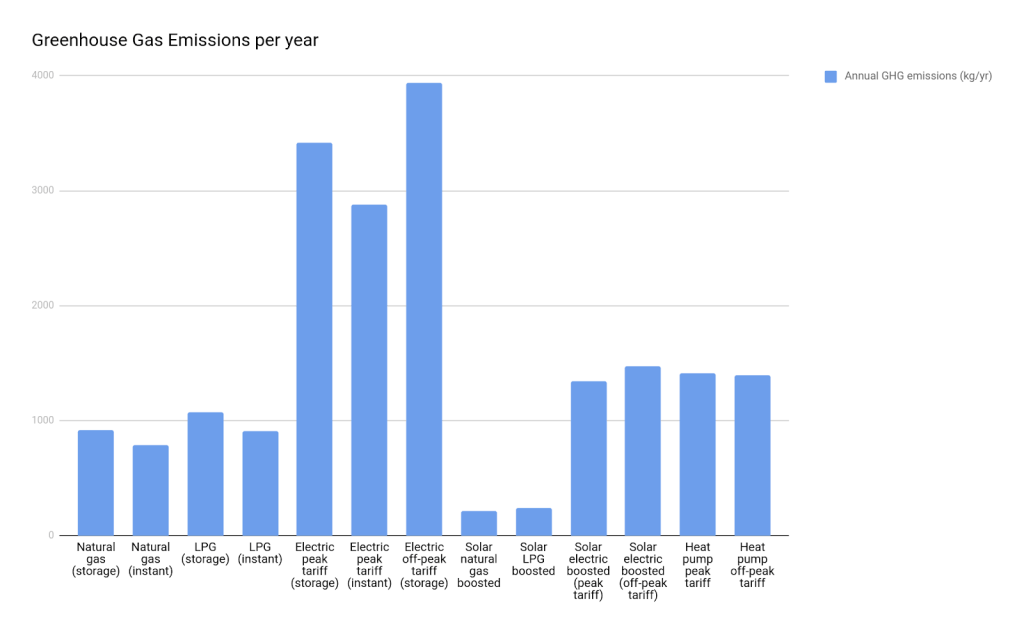
Last but not least, there is the environmental component to consider. Hot water systems have an environmental cost, also called their CO₂ impact, that affects their overall costs. The table below sets out the estimated greenhouse gas emissions in kilograms per year for each kind of system.
Your knowledgeable hot water experts
If you would like to know more about hot water systems, their associated costs and what systems would suit your home, give Brisbane Plumbing and Drainage a call on 1300 616 203 or complete an online contact form today. We are the plumbing specialists when it comes to all things hot water, so give us a call!
by BPD Team | Dec 8, 2021
Thanks to modern plumbing systems most of us don’t give a thought to how the freshwater gets in or where the wastewater from our homes goes once we flush the toilet, take a shower, or turn on the washing machine. That is until problems start to occur.
Unfortunately, these issues often appear after hours or on the weekends when help is not so near at hand which is why it’s important to know what to do in a plumbing emergency. The local plumbing team at Brisbane Plumbing & Drainage have put together a handy list of ‘what to do’ and ‘what to avoid’ when disaster strikes your home or business plumbing system.
Burst pipe
Burst water pipes can happen anywhere along the mains water line from the meter at the front of your property all the way to the pipes in the walls or ceiling of your home. The first sign of a burst pipe could be unexplained water bubbling up in the lawn or wet areas appearing in a wall or carpet.
What to do if a pipe bursts?
If you suspect a pipe has burst on your property regardless of where it is turn the mains water off at the meter. The meter and mains tap is located at the front of your property near the border, it could be above ground or inside a meter box. This will stop the water supply to your home. Also, contact a plumber for water leak detection to identify the source of the leak and repair it immediately.
Gas leak
Any suspected gas leak must be treated very seriously. If you think you have a gas leak in your home:
- Turn off all gas appliances, including pilot lights
- Turn off the gas supply at the meter valve or gas bottle
- Open the doors and windows to ventilate your home
- Call your gas plumber or gas fitter to find and repair the leak
- Turn off all gas appliances including pilot lights

Turn off all gas appliances including pilot lights
Do not:
- Try to find the leak yourself.
- Attempt to find the gas leak using a naked flame or lighter.
- Operate any electrical equipment close to the gas leak which includes the use of light switches, phones, torches etc.
- Use cigarettes, matches or a lighter near the leak.
If the leak is outside your home but between the meter and your house – turn off all appliances and disconnect the gas supply at the meter valve, avoid the area and call a licenced gas fitter.
If the leak is on the street side of the meter – avoid the area and report it to your local gas authority immediately.
Brisbane residents can report a natural gas leak to Australian Gas Networks by calling 1800 427 532.
Blocked sewer or toilet
A blocked sewer drain or blocked toilet can get very smelly and messy really quickly. If your toilet is clogged it’s important to avoid repeated flushing as this could just make the situation worse.
What to do if your toilet is blocked?
Please note – before you attempt to clear a blockage yourself remember that whatever is blocking the drain, or backed up behind the blockage, may come back up the drain or toilet and not along the sewer drain which can leave you with a very big stinky mess. If you are not prepared to deal with what may come back up it’s probably best to call your blocked drain plumber.
If you have a plunger and the water level is still on the lower side you could use a firm plunging motion to see if you can dislodge the clog.
What to avoid:
- Using a drain auger or plumbers eel yourself – you risk damaging the pipes
- Repeated flushing
- Poking other items down the drain or toilet
No water
Losing the water supply to your home can be caused by a burst water pipe (see above) or an outage in your area.
Check for scheduled outages or emergency works with your local water authority. Brisbane residents can check with Unity Water here – unitywater.com
Need help now?
The team at Brisbane Plumbing and Drainage understand that plumbing emergencies can happen at any time of the day or night, which is why our emergency plumber is on call 24 hours a day 7 days a week to respond quickly to all your urgent plumbing problems. Call 1300 616 203 now.
Also helpful – When to call an emergency plumber?