Hot Water Systems Australia 2026: Types, Costs, Installation
There is no single best hot water system for every Australian home in 2026. Your ideal choice depends on household size, budget, and energy source.
We install every system type, but we start with a practical plan: match recovery rate and storage to your peak demand, then model lifetime costs with available rebates. Our licensed team designs and installs, with fixed upfront pricing, flexible finance and 24/7 emergency support. Below, we compare types, costs, sizing, efficiency, and Brisbane-specific tips so you can choose with confidence.
Key Takeaways:
- Heat pumps cut electricity use by 60% to 75% and premium models reach a Coefficient of Performance (COP) of 5.2, delivering strong long‑term savings.
- Electric storage is cheapest to install but often costs $375-$1,200 per year to run, while heat pumps average $200-$350.
- In sunny Brisbane, 283 clear days a year make solar-integration systems a popular option.
What Types of Hot Water Systems are Available?
Australia’s market clusters into four categories:
- Electric: Electric systems remain common, serving millions of households across Australia. These systems are simple and reliable, with options for stainless steel tanks which cost more but tend to have a longer lifespan.
- Gas: Gas continuous flow units excel at fast recovery and high simultaneous demand. Typical delivery is up to about 4 litres per minute.
- Solar: Solar hot water systems, in the right climate, can meet up to 90% of household hot water needs.
- Heat pump: Heat pumps lead for efficiency because they move heat rather than make it, using 60%–75% less electricity than standard electric heaters.
System Costs and Running Expenses in 2026
Look beyond sticker price and compare lifetime costs. A cheaper unit price might lead to higher long-term running costs. For example, electric storage systems are often the cheapest to buy, yet they typically have the highest running costs. Whereas, heat pumps generally cost more upfront, and many households pay in the $3,500-$7,000 range depending on model and complexity, yet they commonly run at $200-$350 per year. Federal Small‑scale Technology Certificates often reduce heat pump and solar prices resulting in a better long-term cost.
When you compare an electric tank to a heat pump, the annual savings can approach several hundred dollars, so many homes recoup the premium in roughly three years using typical prices and bills. Complex installs or relocations can add significant labour for electrical and plumbing adjustments, so factor that into quotes.
Rebates and Value
STCs lower upfront prices for eligible heat pump and solar units by a typical $900-$1,200, which shortens payback periods further. Furthermore, in high‑solar regions, pairing timing controls with storage can shift usage to cheaper or self‑generated energy, improving lifetime value.
Choosing the Right Size and Capacity
Start with demand. A common planning guide is 50-70 litres of hot water per person per day. Because heat pumps recover hot water slower than gas or electric resistance, storage volume is critical during the morning and evening peaks.
A bath can use around 150–200 litres on its own, which can drain a small tank if other fixtures run at the same time. For heat pumps, many families of four choose about 270–300 litres to create a comfortable buffer during peak demand. Water‑efficient fixtures help too. A 4‑star shower head can reduce water use by around 9L per minute, which eases both water and energy load.
Storage vs instantaneous
Storage tanks shine when you need a reserve for short, intense peaks. Instantaneous systems, especially gas, can be better for long showers or multiple bathrooms running in sequence, but they rely on strong flow and adequate gas supply. Heat pumps benefit from larger storage because their 1-2 L/min effective recovery is slower than gas alternatives.
What are Installation Requirements and Compliance Rules?
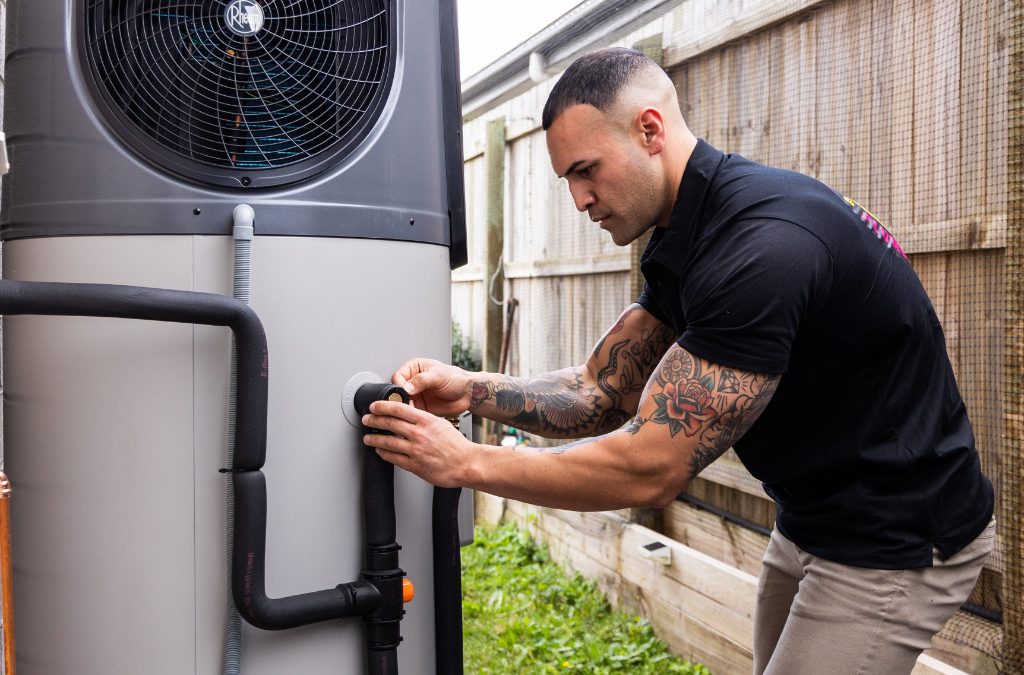
Hot water installs combine high voltage electricity, pressurised hot water, and sometimes gas, so DIY is unsafe and unlawful in Australia. Licensed trades must complete the work and commission the system for compliance.
Australian regulations require storage at a minimum of 60°C to prevent Legionella and sets a maximum of 50°C at bathroom outlets to prevent scalding, or 45°C in high‑risk sites. Tempering or Thermostatic Mixing Valves are installed to blend hot and cold water for safe delivery.
Space, Power, and Gas
Site selection balances noise, airflow, condensate drainage for heat pumps, safe flueing for gas, and access for maintenance. Electrical upgrades or gas line changes can add scope and cost, so we confirm capacity and protections before install.
Maintenance and Longevity Considerations
Most storage systems last about 10 to 15 years with proper care. The main threats are corrosion and sediment. Steel tanks rely on a sacrificial anode that attracts corrosive elements, protecting the tank wall. Once consumed, corrosion accelerates.
The single best maintenance task for tank longevity is to inspect and replace the sacrificial anode every 3–5 years where required. Annual flushing helps remove sediment that can blanket electric elements or gas burners and reduce efficiency.
Common Brisbane issues: We often see hard water scaling in Brisbane that shortens the life of heat exchangers and valves. We recommend scheduled inspections to catch anode depletion, valve wear, and scale early.
Brisbane-Specific Considerations
Brisbane’s subtropical climate delivers about 283 sunny days per year, which is excellent for solar‑aligned hot water strategies. A standard electric tank plus a smart solar diverter or timer can be a low‑maintenance way to turn your tank into a thermal battery that soaks up daytime solar.
Heat pumps are not always necessary in Brisbane’s climate. Households with ample solar and simple needs may prefer electric‑plus‑diverter, while larger families or shaded sites may benefit from a high‑efficiency heat pump. Tariffs and council rules vary, so confirm eligibility and off‑peak options with your retailer.
Brisbane Plumbing and Drainage has completed over 100,000 jobs since 2014, and we back installs with fixed upfront pricing, flexible finance, 24/7 emergency service, and a Lifetime Workmanship Guarantee.
Call us on 1300 616 203 or book your hot water service online now.
Conclusion
Heat pumps currently offer the strongest efficiency gains, often using 60%–75% less electricity than electric storage and reaching COPs up to 5.2 in premium models. Yet the best system for you depends on household size, demand peaks, available energy sources, and site constraints. Electric storage remains a solid choice for low upfront budgets, gas excels for high simultaneous demand when a gas supply exists, and solar‑aligned strategies shine in Brisbane’s sunny climate.