by BPD Team | Mar 28, 2023
Are you here simply because you want to know what the standard bathtub size is in Australia? That’s an easy one to answer:
Australian bathtub standard size
In our amazing country, the average bathroom size is about 3 metres square. So if you’re like most people, that will nicely accommodate a standard bathtub size as well as a toilet, shower and those cabinets and vanity.
So what’s the standard size bath that will fit in there?
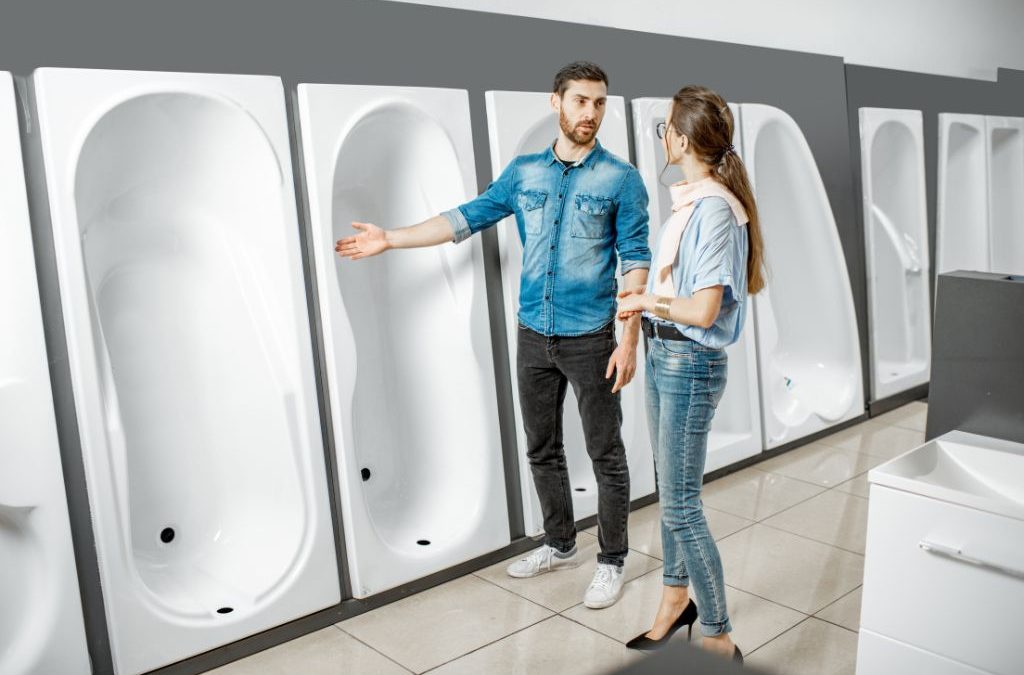
- Built-in bath lengths: The standard bathtub length is 1500-1700mm, and the standard bathtub width is 700-750mm. Typically, the lower end of these bathtub sizes are referred to as ‘small’, and the upper end is ‘large’.
- Freestanding: It’s really about the same standard bathtub sizes Australia-wide for freestanding baths too, although there really isn’t a freestanding standard size bath in this category as they come in so many different shapes and sizes.
- Standard bath heights: As for the height, otherwise known as the depth, the standard size bath in Australia is about 380mm for built-in. As for freestanding, it’s usually quite a bit deeper compared to built-in – with grand claw-foot baths up to 600mm and even more!
But what about if your bathroom is bigger, smaller, or you’re planning renovations and you haven’t quite decided upon the precise layout or dimensions, but have your eye on a particular-sized bath? The good news is that while 1700mm may be standard (many manufacturers use the length of a bath only to summarise its size category), you can find a tub that is much smaller and much bigger, too. Baths in the range of 900mm up to 1900-2000mm are very easy to find, but the sky – and the manufacturer – really is the limit.
Bathtub sizes – What else should you know?
Are you weighing up all those bath sizes Australia-wide for your bathtub installation? Make sure you’re laying back in the tub of your particular dreams by following these tips:
1. Freestanding needs space
They may be simply bigger than a built-in or ‘inset’ bath, but freestanding baths obviously need space all around them too – as it just isn’t going to look good at all tucked away in a corner. How much space? We recommend at least 100-150mm all the way around.
2. Considered a corner bath?
If your bathroom is a bit of a squeeze but you love a tub that it’s a bit grander, maximise the look and stretch out those legs with a bespoke corner bath. They’re specially shaped to make use of every square inch of your favourite room.
3. Can you even fit it through the door?
You know what’s great about those standard bathtub sizes we mentioned above? Answer: they fit through a standard door. So just make sure you don’t spend your life savings on the bath of your dreams – only to discover that you can’t get it in the bathroom. D’oh!
4. Remember the soaking depth
While the physical dimensions of your bath heights, lengths and depths are crucial to consider, many people overlook what could be the most important thing to them – the soaking depth. Remember, the actual depth is a measure from the very bottom of the bath to the very top. But the actual soaking depth – the depth of the water when it’s full – is smaller, so make sure you get it right for your preferences.
5. Match your taps, tiles & basins
Sure, you have a favourite bathtub size, shape & type. But you also have a preference for all those taps, tiles, basins and other bathroom features – so make sure it all works for you from a practical and aesthetic perspective prior to buying the actual tub.
6. Don’t forget the bath weight
Size and dimensions are all good and well, but bear in mind that when you deviate from those standard sizes, weight becomes a factor as well. When you head to the bigger and grander end of the bath spectrum, the tub itself can tip the scales at a hefty 500kg and even more, which may need structural reinforcement of your floor to safely hold it.
7. Ask a plumber
You know who knows more than just about anyone else about bathtub length, width, depth – and everything else about bath styles, plumbing requirements, installation and more than you could possibly ever think about? Answer: your friendly local plumber.
Bath sizes standard – What’s next?
When you’re putting in a new bath, the first – and perhaps the only – expert you should talk to is a fully-licensed plumber, who has undoubtedly put in more of them than you can imagine. That’s definitely the case right here at Brisbane Plumbing & Drainage Plumbing, who can help you size and install the bath of your dreams – backed by our 100% lifetime workmanship guarantee.
Got your eye on a new tub? Get in touch with the friendliest and hardest-working Brisbane plumber today – and we’ll do the rest.

by BPD Team | Mar 17, 2023
Which room at your place is your sanctuary? For so many people, it’s the bathroom – because after a long day, you can lock the door, immerse yourself in luxury, and soak up that steaming hot water. Over the past few years, as many people stayed home rather than ventured out, you can imagine just how many people spiced up their favourite room with a much-needed elegant bathroom renovation overhaul. And our prediction for the big shower trend of 2023? That’s simple: the doorless shower.
Have you considered a no door shower?
In the past, the key to a truly luxurious bathroom was a claw-foot, free-standing, deep and elegant freestanding bath. But did you know that 9 out of 10 people prefer a shower over a bath? It’s therefore no surprise that elegant and eye-catching open showers are now dominating the luxury market – and it’s about much more than simply ditching that glass, door or curtain. The doorless shower goes all the way back to Roman times, and for good reason: it’s simple, convenient, and basically only really requires some clever thinking in the drainage department before you’re ready to embrace your brand new walk-in shower and soak up the elegance.
Keen to embrace the boldness and simplicity? Ready to slash your cleaning routine more than in half? Desperate to soak up the unmistakable luxury of doorless showers? Here’s how to embrace the clear winner in the uber-modern shower trends of 2023 with the very best doorless shower ideas:
1. Keep it simple
More specifically, keep those lines clean, keep the materials high quality, and keep that design truly streamlined. What we mean about ‘streamlined’ is that the walls, floor and even the ceiling can be finished in the very same elegant material or colour, and that any shelves and benches are fully integrated for a serious elegance-meets-Space-Age look.
2. Prioritise the drainage
Remember, there’s no door, screen, curtain – nothing. That’s the essence of showers without doors, but you simply must ensure that the water is contained where it should be. For starters, consider raised edges around the shower floor base, but it’s really all about the ideal drainage gradient towards those seamless shower drains, without spillage and pooling. All that water obviously needs to be contained to the actual shower area, so make sure all these are ticked off:
- Waterproofing
- Floor gradients
- Water spray radius considerations.
3. Consider an accent wall
The beauty of the screenless shower, the doorless shower, the curtain-less shower, is that it really does invite you to maximise the aesthetics of your new space. So why not add a touch of drama? We think one of the best ways to do this is with a feature or accent wall, which will contrast against the rest of the open space. Don’t be shy to explore your artistic side to really make your new eye-catching no-door shower pop.
4. Say ‘bye-bye bath’
Even with a small bathroom space, showers without doors are still a possibility. But it may not really be worth all the bother without making it grand and spacious – bigger than the average shower cubicle you’re used to. So have you considered ditching the bath altogether? You’ll take the style options to the moon and back even in a small bathroom by forgoing the tub and making your doorless shower the centrepiece of your bathroom renovation in Brisbane.
5. Or integrate the bath instead
Does the idea of a shower integrated with a bath remind you of a cheap-rent, super-practical but luxury-less solution? Expand your thinking by considering a grand open shower design that has enough space in there for a luxurious freestanding bath. Remember, it doesn’t matter if the bath gets wet while you delight in the vastness of your doorless shower, as long as you get the drainage right. And just imagine laying back in that claw-foot bath while your partner chats to you from the very same space under the open shower. No joke, it might just be our favourite among all of those bright doorless shower ideas.
Showers without doors are our speciality!
Have we convinced you that showers without doors are the way to go for a seriously luxurious soak? Here at Brisbane Plumbing & Drainage, we can – as our name implies – achieve the perfect drainage solution for your elegant new space, as well as handling every other aspect of your shower & bathroom overhaul from start to finish. To benefit from a no-obligation quote, 24/7 emergency plumber service and our 100% satisfaction and workmanship guarantee, get in touch with the friendly team at Brisbane Plumbing & Drainage today.

by BPD Team | Feb 16, 2023
Floor drains are an essential part of a building’s plumbing system. They are designed to prevent water damage by draining water away from floors and other surfaces. A floor drain is typically installed in areas where water may accumulate, such as bathrooms, kitchens, basements, and laundry’s. In this post, we will provide a complete guide for floor drains, including different types, materials, installation and maintenance.
Types of Floor Drains
Floor drains come in various types, depending on their intended use and location. The following are the most common types of floor drains:
- Point Drains. Point drains, also known as grate drains, are the most common type of floor drain. They consist of a round or square-shaped drain with a grate cover that allows water to flow through while keeping debris out.
- Linear Drains. Linear drains, also known as trench drains, are long, narrow drains that are usually installed in showers or other areas where water flows in a straight line. They are typically made of stainless steel or PVC and come in various lengths and widths.
- Trench Drains. Trench drains, also known as channel drains, are similar to linear drains, but they are designed to handle larger volumes of water. They are typically installed in outdoor areas, such as driveways, pool decks, and patios.
- Area Drains. Area drains, also known as sump drains, are designed to collect water from large surface areas, such as driveways, parking lots, or sports fields.
Floor drains are typically made of PVC, stainless steel, cast iron, or bronze. The choice of material depends on the intended use and location of the drain. Stainless steel is commonly used for commercial and industrial applications, while PVC is suitable for residential applications.
Floor Drain Installation
The installation of floor drains requires careful planning to be effective. The following are the steps involved in installing a floor drain:
- Determine the location of the drain.
- Determine the type and size of the drain.
- Prepare the area where the drain will be installed.
- Install the drain and connect it to the plumbing system.
- Test the drain to ensure that it is functioning correctly.
It is essential to hire a trusted local plumber to install floor drains, as any mistakes could lead to water damage or other costly problems.
Floor Drain Maintenance & Blockages
Regular cleaning and maintenance are essential for the proper functioning of floor drains. Here are some common issues with floor drains and how to address them:
Blockages are a common issue with floor drains. In case of a severe blockage, it is recommended to hire a professional plumber to unblock the drain. However, for minor blockages, there are things you can try to help.
So how do you unblock a floor drain? A plunger can often dislodge the blockage. If the blockage persists, remove the drain cover using a screwdriver and use a drain snake or drain auger to break up and remove the blockage. Flush the drain with hot water and a cleaning solution to remove any remaining debris. Replace the drain cover and monitor the drain to ensure it is functioning properly. Again, if these DIY drain unblocking tips don’t work, hire a pro.
Foul odours emanating from the drain are an indication of a buildup of debris. To address this issue, remove the drain cover, clean the drain using a mixture of baking soda and vinegar, and flush the drain with hot water.
Drain flies are tiny insects that often breed in drains. To prevent their growth, use a cleaning solution that contains bleach, as this will kill the eggs and larvae. Additionally, regularly flushing the drain with hot water will help prevent future infestations.
It is essential to regularly maintain and clean floor drains to prevent blockages and build up of materials, which can cause water damage and other costly problems.
Conclusion
Professional floor drain installation and regular maintenance is crucial to preventing water damage in your home or business. If you need help with installation or floor drain problems, contact us for a fast response and quality solutions. When you need plumbing services near me, we have you covered right across south east Queensland.
by BPD Team | Dec 28, 2022
Sure, there are a lot of different types of shower configurations these days – because who doesn’t want the ideal space for that long soak at the end of a hard day? Walk-in showers are all the rage, while waterfall and rainfall showers are designed for luxury. But did you know the options for shower drainage are actually just as vast – or even more so?
Obviously, you need that shower drain so that all that gushing water disappears as quickly as it hits the ground. But if you’re doing some renovations and you want something a little different or a little special for your bathroom drainage, give these shower drains some thought:
1. Point drain
So this is the really familiar one that’s been around for decades upon decades – a geometric-shaped drain that’s usually central in the shower floor and at the lowest point.
2. Linear drain
If a ‘point’ drain refers to the fact that the water all runs into a single ‘point’, then linear drains for showers should also be quite self-explanatory.
That’s because it’s linear – or in the configuration of a long, narrow line, although the length and narrowness obviously differs. But the surface area of the drain is larger than a point drain, with the entire floor sloped towards it for very efficient drainage.
Shaping the floor for linear drains is actually easier than with point drains, and there’s normally no need to cut up the tiles, either.
3. Decor drain
It’s important to understand that when it comes to shower drain types, there are really only two – and we’ve just outlined them above in #1 and #2.
Where the real fun comes in is picking the configuration and appearance of the one you select for your shower drain. Firstly, it’s about the grate style and finish – the part you see. And the great news is that the eye-catching options for ‘decor’ or decorative drains are nearly endless, and put a stop to the old notion that shower drains look purely functional and boring.
4. Invisible drain
Another option is a tiled shower drain, with the drain basically sitting underneath the exact same sort of tile as the rest of your shower floor. The water then drains away quite efficiently around the edges of the basically ‘invisible’ drain.
Explore all your shower drainage options
Ask your friendly bathroom renovation plumber, however, and they may have some much more technical answers to the types of shower drain covers suitable for your place – and you’ll hear terms like one-piece, three-piece and multi-piece. It also depends on your available or desired floor rate, expert recommendations for minimising the risk of clogging or drainage issues, and more.
Got any more questions about shower drains types – or are you ready to book in for a consultation with Brisbane’s drain plumbing experts? Our name says it all and we can take care of all of your other plumbing needs too, so get in touch with the professional Brisbane plumbers near me today.
by BPD Team | Dec 28, 2022
Plumbing problems can be a nightmare for any property owner and depending upon the issue, some of them can prove very costly to repair. Although there’s a lot to be said for hindsight, many problems can be prevented before they get to this stage, so whether the end result is a broken pipe, serious damp in your wall, or a faulty water pump, here are some warning signs that you shouldn’t ignore.
Blotchy patches
If you start to notice slight blotching on your wall or in your ceiling then it could be cause for concern as it’s likely to be the early stages of damp. The issue is that a damp wall is generally the sign that something else has occurred.
Here’s a true story… A friend of the family recently had her guttering replaced. After a few months, she noticed a blotchy patch accumulating on her bedroom ceiling. After climbing into the loft space she noticed that the overflow pipe that was supposed to lead from her water tank to her outside guttering had been extended using a piece of sellotape.
Needless to say, it had leaked and rather than any excess water being expelled outside, it had been happily dripping away directly into her ceiling. Just imagine if she hadn’t noticed or hoped that the staining would go away or dry out entirely, it would have caused thousands of dollars worth of damage.
Spluttering tap
Have you ever turned on the tap only to find it spluttering? Often it will right itself soon after and normal water flow is generally resumed. However, if the tap splutters on several occasions then it may be a warning sign that something else is afoot.
It could indicate that you have cracked or leaking water pipe, or indeed a more serious break somewhere along with the connection, and this can cause trapped air (hence your spluttering tap).
Slow drains
If your kitchen sink or shower doesn’t drain away as quickly as it should, then it could be a sign that there’s a blockage further down the pipework.
As a general rule, drains don’t block up instantly and instead will get slower and slower over a period of time. Eventually, they won’t drain away at all and it’s at this point when most people call in a plumber.
Instead, if you tried to attack the slow drain with a common or garden plunger when the water was still moving, it might on some occasions be enough to clear the blockage completely and you’ve just saved yourself a lot of money. Otherwise, promptly contact us for blocked drain cleaning in Brisbane.
Low water pressure
Low water pressure can be frustrating and can make it difficult to complete everyday tasks like taking a shower or washing dishes. It can also be a sign of a more serious problem, such as a leak in the plumbing system.
Low water pressure can be caused by a variety of factors. One common cause is obstructions in the water pipes, such as mineral deposits or debris that can build up over time. These obstructions can block the flow of water and reduce the overall pressure. If a pipe is leaking, it can cause the water pressure to drop as the water is escaping before it reaches its destination. A faulty pressure regulator or pressure tank can also contribute to low water pressure. These devices are designed to maintain a consistent water pressure, but if they are not functioning properly, it can lead to a drop in pressure. In some cases, low water pressure can be caused by reduced water flow from the local water supply or by improperly sized pipes for the amount of water being used.
It is important to identify the root cause of low water pressure in your home to properly address the issue. If you are experiencing low water pressure, it is recommended to contact a licensed plumber to diagnose and fix the problem.
Corroded flexi hoses
There are potential dangers associated with under sink braided flexi hoses. Flexi hoses are prone to leaking and bursting, which can lead to water damage in your home. Over time they can corrode, eventually failing with serious consequences.
It is important to regularly inspect and maintain your under sink flexi hoses to minimise the risk of these dangers. If you notice any signs of wear or damage, it is recommended to replace the hose as soon as possible to prevent potential problems.
Your local plumber
If you’ve ignored the warning signs or simply didn’t recognise them when they occurred now is the time to contact the experienced plumbers at Brisbane Plumbing and Drainage.
Whether it’s a residential, commercial, or industrial premise we have the expertise and the knowledge to put it right. Give us a call on 0421 185 947 for a competitive plumbing quote.