No Results Found
The page you requested could not be found. Try refining your search, or use the navigation above to locate the post.

When you close your eyes and think of the word “tap”, a cartoon image of the most generic tap type probably comes to mind. But when an experienced plumber is asked to close their eyes, dozens of different types of taps are likely to start swirling around in their head.
But while we understand it may be a little difficult to start contemplating all those different types of tap configurations, our Brisbane plumbers think there are at least 7 that the keen home owner should get their head around:

These may actually be the types of taps that you imagined in cartoon form in the first sentence of this blog. Think of a run-of-the-mill separate ‘hot’ or ‘cold’ tap you would have seen in your Grandma’s bathroom when you were a kid, and you already understand the pillar type of tap.
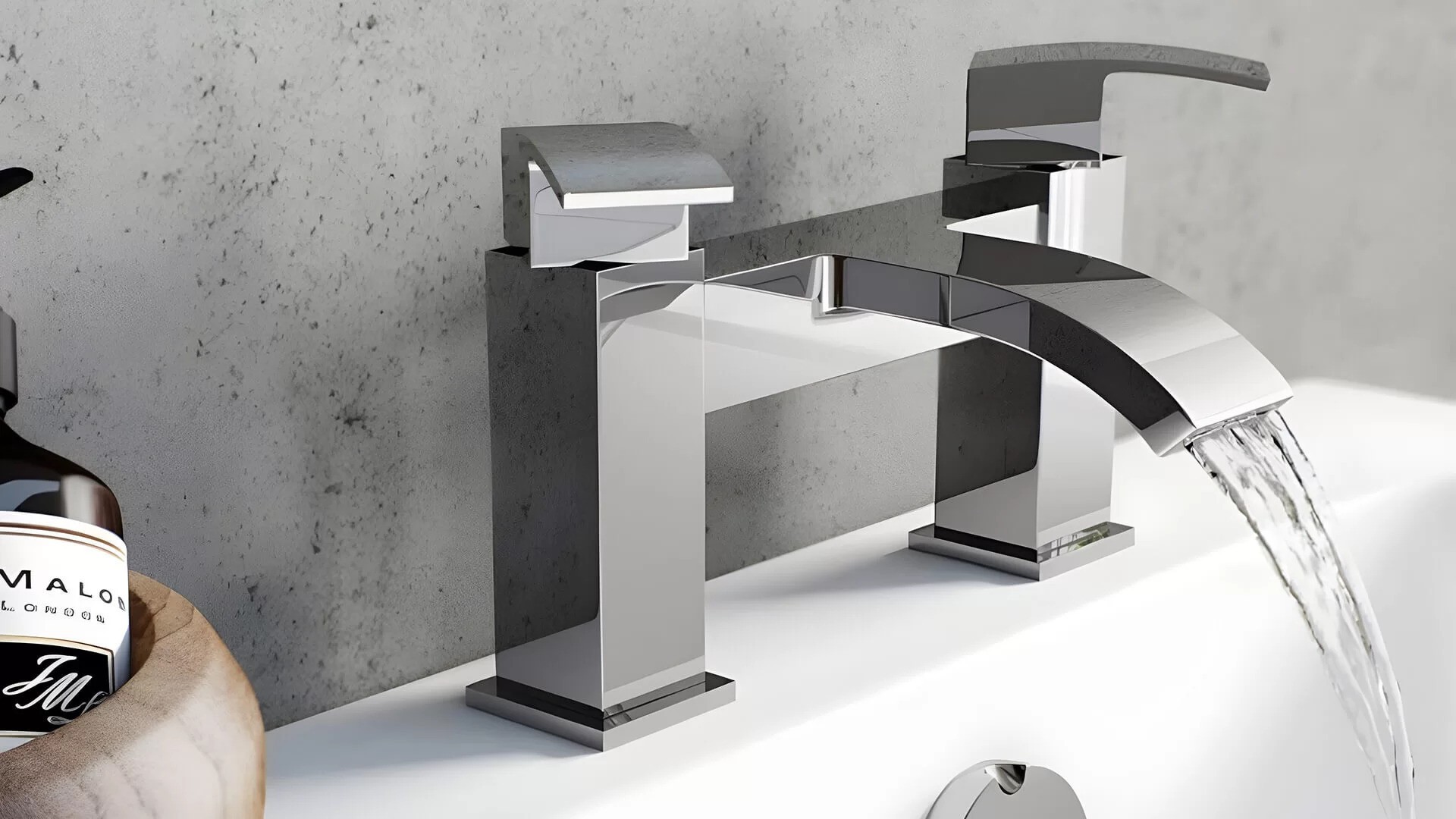
If your Grandma recently renovated her kitchen, however, she probably now has mixer taps – and possibly in her bathroom, too. They’re very popular because it’s essentially a single tap but you’re able to control just how hot or how cold the flow of water is.
The name may be a bit unfamiliar, but it’s basically a variety of the mixer type of taps. There will just be a single handle, though – lean left for hotter, and right for colder.

Your plumber may refer to that traditional washer as a ‘compression’ washer, and if you know how to change a washer when your tap is dripping, these are the type of tap we’re referring to here. In its most basic form, it’s a pillar tap with a twisting handle – and the washer does the work of controlling how much water comes out as you twist.

After the standard compression washer, this is probably the second most popular washer type taps. The ‘washer’ is in the form of ceramic disc, featuring holes that progressively allow and disallow the flow of water as those holes align. If you find a tap that is particularly easy to crank on to full, it’s probably a disc tap type.

Forget those holes, though, because the ball-type tap operates thanks to the functionality of … a ball! You’re actually most likely to find this tap type in the garden, featuring a rudimentary handle. As you move the handle, the ‘ball’ controls not only the speed of the flow but also potentially the hot/cold water mix. Unfortunately, they’re rather prone to leaking.

The working part of this tap type is an internal cartridge, with left-right movement operated by the user controlling the flow. The beauty of the cartridge is that a single user interface – the handle – controls both flow speed and temperature. Left and right for the temperature, and up and down for the flow.
Woah – that’s a lot of different taps! Believe it or not, there are actually plenty of other types that you’ve probably used in your lifetime but may not know their names. Need help navigating this tricky area of plumbing? The friendly team of specialists at Brisbane Plumbing & Drainage certainly know their way around all those different taps – including how to repair leaking taps or install new taps to replace the ones that may be playing up at your place. For help with all the various tap types and 100% guaranteed workmanship on every single job, give Brisbane Plumbing & Drainage a shout today.

Since we started our Brisbane plumbing company many years ago, we’ve always made a point of sharing useful information on all aspects of home plumbing with our customers and website visitors. In fact, many posts are inspired by the questions our customers ask.
Today we reached a milestone, 100 plumbing guides in our blog! In this post we’ll recap the top 10 most popular, let’s get straight to it…
The page you requested could not be found. Try refining your search, or use the navigation above to locate the post.
So that wraps up the top 10. It’s no surprise that the top posts align with the more common plumbing problems we come across. So questions about fixing blocked drains and hot water systems feature heavily.
Checkout our plumbing blog for more handy tips and follow us on Facebook to see the latest posts. Of course, if you need assistance with your plumbing in Brisbane, get in touch and one of our plumbers will be on their way with a fully stocked van to get your plumbing right.

Has someone told you that their Brisbane tap water tastes like dirt? Or that it tastes rusty? Earthy? Metallic? Have you noticed for yourself that Brisbane drinking water isn’t what it used to be? Is it because of all the recent rain and flooding? Should you be worried? That’s an awful lot of questions, so we’re proud to be able to bring you a few of the answers – and hopefully, some that at least begin to reassure you.
First up, no – you’re not nuts. You’re not imagining things. And no matter where you are in Brisbane or elsewhere in our beautiful state of Queensland, plenty of people have been noticing it. Those people even include Seqwater, the government-run statutory water treatment and supply authority, who admitted early this year that residents have been noticing a change in the “taste and smell” of the Brisbane water supplied to their homes which they say is “temporary”.
Seqwater confirms that it’s about the recent torrential rain and flooding, and resulting changes in “naturally occurring” organic compounds that have no material impact on Brisbane’s drinking water quality or safety. So even if you’ve noticed the change yourself, rest assured that Seqwater is still closely monitoring and testing the Brisbane water quality so that it meets the strict requirements of Australia’s drinking water guidelines.
Let’s answer a few more common questions about the drinking water Brisbane residents just like you hydrate and cook with every single day of your lives:
Q: Where does it come from?
A: It may all come out of your taps, but the original sources are many, including rivers, desalination plants, dams, barrages, bores, weirs and more.
Q: So how do I know Brisbane tap water is safe?
A: The Queensland government, and Australia’s federal authorities, lay out strict guidelines not just for the safety of Brisbane tap water, but also its aesthetic values. One such guideline is that you will face no “significant risk” to your health even if you drink Brisbane tap water forever.
Q: So why is Brisbane drinking water dirty?
A: While we all want clear, crisp water, it’s just a fact that iron and manganese can make your tap water look dirty. And if it smells or tastes a bit off, that could be because of:
It could also be because of your own plumbing pipes, but in just about all cases dirty tap water is still not harmful because it’s run through a strict coagulation and filtration process at the treatment plant.
Feeling reassured? While we do hope so, there’s nothing stopping you from adding in a further protective measure for your family’s Brisbane drinking water by considering getting a reverse osmosis water filter installed by a licensed plumber.
While there are other filters out there, only the innovative reverse osmosis process guarantees that 98% of fully-dissolved contaminants, chemicals, minerals and organic nasties are gone from the water that touches your lips. Say goodbye to:
Interested in finding out how quickly and affordably you can get a reverse osmosis water filtration system plumbed in at your place? Get in touch with the friendly local plumbers at Brisbane Plumbing & Drainage, because the quality of Brisbane drinking water shouldn’t be something you ever need to worry about.

Almost everything related to your pipes, drains and plumbing fittings and fixtures need to be done by a fully-licensed professional. But let’s say you’re such a keen do-it-yourself-er that you’re keen to at least know how to replace a toilet – because, after all, empowering yourself with extra knowledge is rarely a terrible idea, is it? And at the very least, when you’re collecting quotes for your licensed, legal toilet replacement or installation, you’ll have a very good grasp of what the plumbers are talking about.
Here’s how it’s done:
The most important thing, of course, is to choose a new toilet that fits the space, which may or may not involve measuring a new toilet rough-in.
You’ll also need a pile of common tools, and potentially some specialty components like the supply tube, wax ring with a flange and teflon tape.
First up, turn the mains water off and empty the toilet by flushing it. Then it’s just a case of unthreading the main coupling nut to the water supply as well as the tank bolts, and then undoing the nuts that secure the bowl to the floor. If they’re being stubborn, you may need to revert to a hacksaw.
Warning: even professional plumbers hate removing the gross old wax rings from the sewer opening! We advise using a putty knife and scraping it off like butter, and then stuffing a rag in the drain to plug the disgusting smell and fumes.
Pull out the rag so that you can install brand new brass toilet bolts into the flange slots – and don’t forget the washers! Unwrap your brand new wax ring and position it on the flange.
You should now be ready to start securing the new toilet into place by lifting it over the ring and aligning the bolts. Be patient at this point, because while it may sound easy – it’s not! Now, ask yourself: Is it wobbling? If so, a 5 cent piece could be priceless to level things up before you secure the washers and toilet nuts. If part of the bolt section is too long, use the hacksaw again before caulking the base of the toilet.
Now you’ll be attaching the toilet cistern, and if you’re in luck then your new toilet comes with fill and flush valves that are ready to go. If not, it will be up to you to install them yourself before tightening the spud nut along with a spud washer.
It may be necessary to tweak the toilet fill valve and position it inside the cistern. Then, check the valve shank is aligned at the bottom before tightening the nut by hand.
It’s now a case of putting washers on the bolts and securing everything in place, whilst being careful not to tighten so much that it damages the material.
Finally, re-attach the water supply by connecting new water tubing to the fill valve – and when you turn that mains water back on, check patiently for leaks. The last thing to do is to attach the toilet seat … and you’re all done!
Easy peasy? Or for peace of mind and full compliance with the local regulations, get in touch with Brisbane Plumbing & Drainage and we’ll do it all for you in a flash. It’s great to keep expanding your DIY knowledge, but some things simply need to be done by the licensed, experienced Brisbane plumbers – and we’re simply the safest set of hands all across Brisbane & beyond. Get in touch with Brisbane Plumbing & Drainage today and we’ll take care of the rest!

What started life as a pretty basic hole in the ground had by the year 1600 become something vaguely similar to the flushable toilets of today. And for the past 200+ years, apart from the utter transformation of human health thanks in great part to the hygienic modern toilet, not a lot changed between then and today when it came to the basic technological toilet design. A fundamental feature of the modern toilet is the inner rim – sometimes referred to in the industry as the ‘box rim’ bordering the upper edge of the bowl. It’s role, which performed its function remarkably well, helps to properly and evenly distribute the flushing water in an effective downward motion.
So what’s all this you’ve been hearing about the whiz-bang new rimless toilets, then?
If you’re in the market for a new toilet, you’ll notice that you can now choose between a traditional rim or a so-called rimless toilet. The most obvious difference is in the name itself – there simply isn’t a rim anymore. What that means is that the bowl is no longer bordered and separated from your tush at the uppermost edge.
So what’s the point in that? Well, just as the traditional toilet’s upper rim is all about the flush, the same is true of the sort of rimless toilets Australia is now embracing – it’s all about the flush. The idea is that when you hit the flush button on rimless toilets, the water is still propelled downwards but in an even more efficient way – just like a vortex or whirlpool.
Yes, the vortex flush tends to be a more comprehensive flush, but that’s not the only benefit. In fact, the benefit most people will notice is just how much easier the rimless toilet is to get completely clean. Anybody who has cleaned a traditional toilet knows that getting the out-of-sight underside of the rim 100% clean, and guaranteed to be free of bacteria and other nasties, is basically impossible. Get rid of the rim, then, and the entire toilet can be thoroughly and easily cleaned.
Related Reading: Toilet Won’t Flush But Not A Blockage? Here’s Why!
The fact that the sort of rimless toilets Brisbane Plumbing & Drainage can install for you are now widely offered by the best manufacturers means that price isn’t really a differentiating consideration. So how about water efficiency? Again, it’s not a downside at all because new toilets these days come with a WELS star rating, allowing you to compare rival toilet technologies with extreme accuracy.
Again, rimless toilets have taken off in such a big way that the major manufacturers ensure that the style you fancy is almost certainly available in the rimless variety. All the different toilet types are also available in rimless, whether back-to-wall, wall-faced, wall-hung or any other toilet type.
Are you ready to go rimless? If so, talk to our experts in bathroom renovation plumbing – because you deserve the best advice, guaranteed first-class workmanship and the most affordable price anywhere in Brisbane & beyond. Take the plunge into the world of rimless toilets by getting in touch with Brisbane Plumbing & Drainage today!